
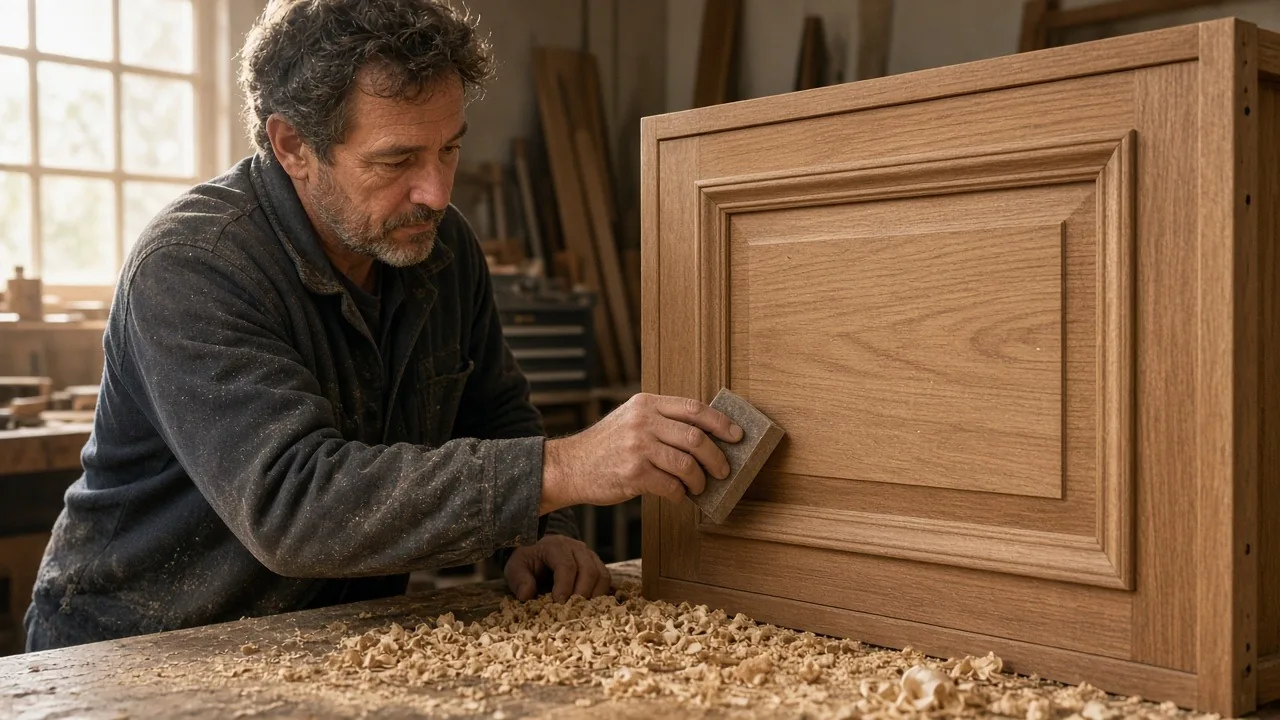
Yes — woodworking businesses can get funding, and most of it goes to two things: shop machinery and the lumber for a job before the customer pays. Funders look at steady deposits, time in business and the equipment being bought. One 2-minute application matches you to the funders whose guidelines you meet.
Why is funding different for a woodworking business?
A woodworking shop is funded on two very different needs at once: expensive machinery that lasts for years, and materials that have to be bought weeks before a job is paid for. A table saw, jointer, planer, dust collection and finishing booth make up the fixed base; a CNC router or edge bander is often the single biggest purchase a growing cabinet shop makes. Lumber, sheet goods and hardware for each job are the variable cost.
It is a trade made up mostly of skilled workers in small operations. The Bureau of Labor Statistics counts 199,900 woodworker jobs in 2025, including 81,800 cabinetmakers and bench carpenters, with 42% employed in furniture manufacturing, 37% in wood product manufacturing and 4% self-employed. Because revenue arrives in job-sized lumps rather than daily sales, funders read deposit patterns over several months rather than a single good one.
What funding options fit woodworking shops best?
Match the product to the purchase. A machine that will run for a decade is a different need from a lumber order for one kitchen.
- Equipment financing: for CNC routers, saws, edge banders, dust collection and finishing equipment, with the machine as collateral and a term tied to its useful life.
- Business line of credit: for lumber, sheet goods and hardware between a customer’s deposit and final payment, drawn only when a job needs it.
- Invoice factoring: for shops doing commercial millwork for contractors or builders on net-30 to net-60 terms, where the unpaid invoice is the asset.
- Merchant cash advance: a faster option when timing is urgent, repaid from receipts and generally costlier, so compare it against the others before choosing.
How do you fund lumber and materials for a big custom job?
Start with the customer’s deposit, then fund only the remaining gap until the final payment. Most custom shops take a deposit at signing that covers some or all of the materials; a line of credit or short-term working capital covers the rest for the weeks the job is in the shop, and is repaid when the customer pays on install.
The risk is mismatching the product to the gap. Funding a six-week kitchen job with a product that takes daily payments means paying for the materials while the cabinets are still on the bench. A line of credit you draw against for each job and repay on completion follows the shape of the work far better. If you do commercial work for general contractors who pay on net terms, purchase order financing and factoring are built for exactly that delay.
Should you finance a CNC router or other shop equipment?
Financing usually makes sense when a machine pays for itself in labor saved or work won within its useful life. A CNC router can cut a cabinet carcass in a fraction of the time it takes by hand, which raises how many jobs the shop can take on — but only if there is enough work to keep it busy.
Before you sign, get the dealer’s written quote including delivery, rigging, installation and training, check whether your electrical service and dust collection need upgrading, and ask whether a used or refurbished machine is an option. Compare a loan with a lease too: our guide to equipment loans versus equipment leases covers when owning beats renting a machine you will upgrade.
How does a woodworking business qualify for funding?
Funders typically want recent business bank statements, a minimum time in business and, for equipment, a quote for the machine you plan to buy. A shop with several months of steady deposits matches with more funders than a brand-new one, though newer shops can still be matched on equipment financing because the machine secures it.
Uneven months are normal in a job-based trade, so be ready to explain a thin month before you are asked — a kitchen paid in one lump looks very different from steady weekly income. Keep business and personal money in separate accounts, because funders read the account the money lands in. Checking your options won’t affect your credit score, so you can see what is available before committing.
How does matching through a broker work?
The Broker Shop is a funding broker, not a lender. You complete one short application and we send it to the funders in our network whose guidelines fit a woodworking business, so they compete for the deal. That matters because a single application is no guarantee: in the Federal Reserve Banks’ 2025 Small Business Credit Survey, 42% of employer-firm applicants received the full amount they sought. You compare offers side by side before choosing. For the full list of products, see all small-business funding options, and for related trades see funding for manufacturers.
Buy the machine before the backlog buries you
A shop that can’t take the next job is leaving money on the bench. One 2-minute application is matched to the funders whose guidelines you meet. It's free, and checking your options won't affect your credit score.
See What I Qualify For →The bottom line: Woodworking shops do best financing long-lived machinery against its own value and covering job materials with a flexible line that is repaid when the customer pays — one 2-minute application matches you to the funders whose guidelines you meet.
Frequently asked questions
Sources: U.S. Bureau of Labor Statistics — Occupational Outlook Handbook: Woodworkers (199,900 jobs in 2025, including 81,800 cabinetmakers and bench carpenters; 42% in furniture manufacturing, 37% in wood product manufacturing, 4% self-employed); Federal Reserve Banks — 2026 Report on Employer Firms, Small Business Credit Survey (42% of applicants received the full amount sought)