
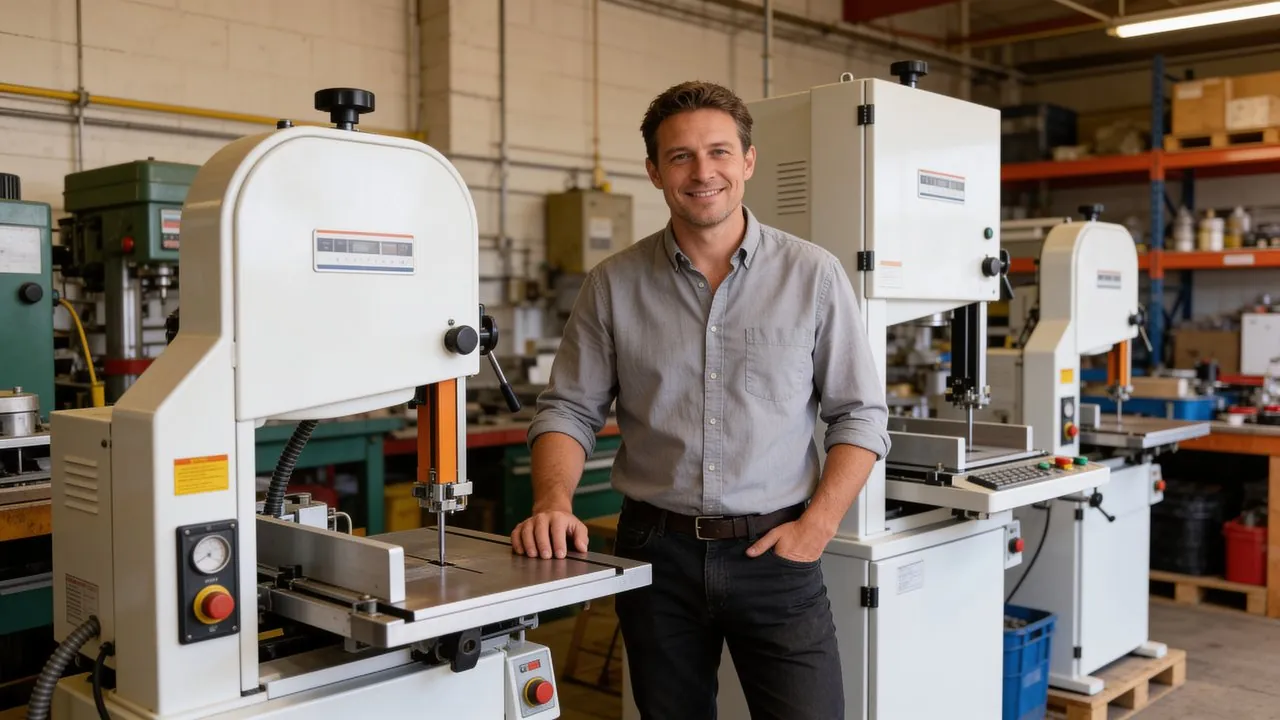
Equipment financing lets you put a truck, oven, excavator, or CT scanner to work in your business now and pay for it over its useful life. Because the equipment itself secures the deal, approval leans on the asset and your revenue rather than on pledging a building or your receivables — which is why businesses that get declined for an unsecured loan are often approved here.
This page covers what equipment financing actually costs, how funders decide, what happens with used equipment, the lease-versus-loan decision, and the tax treatment that changes the real price of the purchase. If you would rather skip ahead, our equipment financing calculator estimates a monthly payment in about a minute. If you already know you want to finance and are choosing who to finance with, our comparison of equipment financing companies covers captives, banks, independents and brokers.
How equipment financing works
The mechanics are simple. A funder pays your vendor for the equipment. You take delivery and repay the funder in fixed monthly installments over a term that is usually matched to how long the equipment will earn. A lien is filed against that specific machine, and when the final payment clears, the lien is released and the equipment is yours free and clear.
That single structural detail — the machine is the collateral — is what makes this product behave differently from every other kind of business funding:
- You usually do not need outside collateral. No blanket lien on all business assets is required in most straightforward equipment deals, unlike much unsecured working capital.
- Terms run longer. Two to seven years is typical, tied to the equipment's expected working life. Compare that to the months-long repayment on a merchant cash advance.
- Payments are fixed and monthly. Not a daily or weekly debit against your deposits, which is what makes revenue-based products hard on a seasonal business.
- Down payments are small or zero. Many deals finance the full invoice; some ask for 10–20% down on used or specialized assets.
What you can finance
If a business uses it to produce revenue and it has a serial number, it is generally financeable. In practice the categories that move most often are:
- Transportation — semi-trucks, trailers, box trucks, service vans, dump trucks. See funding to buy a work vehicle.
- Construction and heavy equipment — excavators, skid steers, lifts, compactors. Our construction equipment financing page goes deeper.
- Restaurant and food service — walk-ins, hoods, ranges, POS systems, delivery vehicles. See restaurant equipment financing.
- Medical and dental — imaging, chairs, lasers, sterilization, practice management systems.
- Manufacturing and shop — CNC machines, presses, lifts, compressors, welding rigs.
- Technology — servers, workstations, networking hardware, specialized software bundles.
What equipment financing costs
Pricing is quoted as an interest rate on a term loan, or as a monthly payment factor on a lease. The rate you are offered turns on five things, roughly in order of weight: your personal credit, time in business, the equipment's resale market, the term length, and whether the equipment is new or used.
Two cost drivers surprise people. First, resale liquidity matters more than the sticker price. A standard sleeper cab with a deep used market prices better than a highly customized piece of automation that only three buyers in the country would want, even at the same dollar amount. Second, the term drives the total cost more than the rate does. Stretching a five-year note to seven lowers the monthly payment and raises what you pay in total — which is sometimes still the right call if the payment has to fit alongside existing obligations.
How to compare offers honestly. Do not compare monthly payments. Compare the total of payments plus any documentation fee, and check the end-of-term condition — a $1 buyout lease and a fair-market-value lease can show nearly identical monthly numbers and differ by thousands at the end. Our guide on comparing funding offers walks through the arithmetic.
Lease or loan: which structure fits
Both get you the equipment. They differ in who owns it and what happens at the end of the term.
Equipment loan (finance agreement)
You are the owner from day one; the funder holds a lien. You claim depreciation. At payoff, the lien releases. This is the right structure when the equipment has a long working life and you intend to keep it — a truck you will run for a decade, a hood system that outlives the lease.
Equipment lease
The lessor owns the equipment and you pay to use it. At the end you buy it out (often for $1, sometimes at fair market value), return it, or upgrade. Leasing fits equipment that goes obsolete fast — technology, imaging, anything where you expect to want the newer model in three years. It also fits when preserving the cash a down payment would consume matters more than eventual ownership.
We cover the trade-off in detail in equipment financing vs leasing and equipment loan vs equipment lease.
Section 179 and the tax math
The tax treatment materially changes what equipment actually costs, and it is the part business owners most often leave on the table. Under Internal Revenue Code Section 179, a business can elect to deduct the full purchase price of qualifying equipment in the year it is placed in service, rather than depreciating it over several years.
For tax year 2025, the Section 179 deduction limit is $2.5 million, with the phase-out threshold beginning at $4 million of equipment placed in service. For 2026 those figures are indexed to $2.56 million and $4.09 million respectively. The deduction cannot exceed your business's taxable income for the year, and the equipment must be placed in service — not merely ordered — within the tax year.
The practical consequence: financed equipment can be deducted in full in year one even though you have only made a few monthly payments. That timing gap is why so many equipment deals close in Q4. We are a funding brokerage, not a tax advisor — confirm the treatment with your CPA before you rely on it, and read understanding business deductions for the wider picture.
Financing used equipment
Used equipment is financeable and routinely funded. What changes is the underwriting. Funders look at the age of the asset, hours or mileage, whether a serviceable resale market exists, and who is selling it.
Expect these differences versus a new-equipment deal: a shorter maximum term, because the funder will not finance past the asset's remaining useful life; a slightly higher rate reflecting resale uncertainty; and a possible down payment of 10–20%. Private-party sales draw more scrutiny than dealer sales, and an appraisal or inspection may be required. Our page on financing used equipment covers the specifics, and who owns the equipment after financing answers the ownership question directly.
What funders look for
Equipment financing has among the more forgiving qualification profiles in business lending, precisely because the collateral is real and recoverable. Generally, funders in our network want to see:
- Time in business — six months or more opens most programs; startups can qualify on strong personal credit plus a solid asset.
- Revenue — enough monthly deposit activity to comfortably cover the new payment alongside existing obligations.
- Personal credit — a meaningful input on rate and term. Weaker credit does not disqualify you when the equipment is liquid; it changes pricing. See funding with challenged credit.
- An equipment quote or invoice — the single document that most often holds up a file. Have the vendor quote ready before you apply.
- Bank statements — usually three to six months. What underwriters read in them is covered in what lenders look for in bank statements.
How long it takes
Smaller transactions are frequently approved within one to three business days once a complete file and vendor quote are in hand. Larger or more specialized purchases take longer because the funder underwrites the asset as well as the borrower, which can involve appraisal or inspection. The most common delay is not credit — it is a missing or vague vendor quote. See what slows down business funding.
When something else fits better
Equipment financing is the wrong tool if what you actually need is flexible cash. It funds a specific asset against a specific invoice; it will not cover payroll, inventory, or a slow month. If the need is broader:
- Recurring, unpredictable needs point to a business line of credit.
- General expansion capital points to a business term loan.
- Speed above all, repaid from sales, points to a merchant cash advance.
- Long-term, lowest-cost capital for a major purchase may point to an SBA loan, which trades speed for price.
Not sure which applies? Compare all the funding options side by side, or apply once and we will match your file against the guidelines of the funders most likely to approve it.
Equipment Financing FAQs
Your questions answered.
Explore Other Funding Options
We offer every type of business financing — we'll match you to the right one.
Sources: IRS Publication 946, How To Depreciate Property (Section 179 election, deduction and phase-out limits, placed-in-service requirement); IRS Revenue Procedure 2025-32 (2026 Section 179 limits of $2,560,000 and $4,090,000; 2025 limits of $2,500,000 and $4,000,000 as amended). Tax treatment described here is general information, not tax advice — confirm your situation with a CPA.
See what you qualify for
One 2-minute application is matched to the funders whose guidelines you meet. It's free, and checking your options won't affect your credit score.
See What I Qualify For →