
Yes — phone repair shops can get funding, and most of it goes to two things: replacement parts on the shelf and the bench equipment to fix more devices per day. Funders look at steady card and cash deposits, time in business and what the money will buy. One 2-minute application matches you to the funders whose guidelines you meet.
Why is funding different for a phone repair shop?
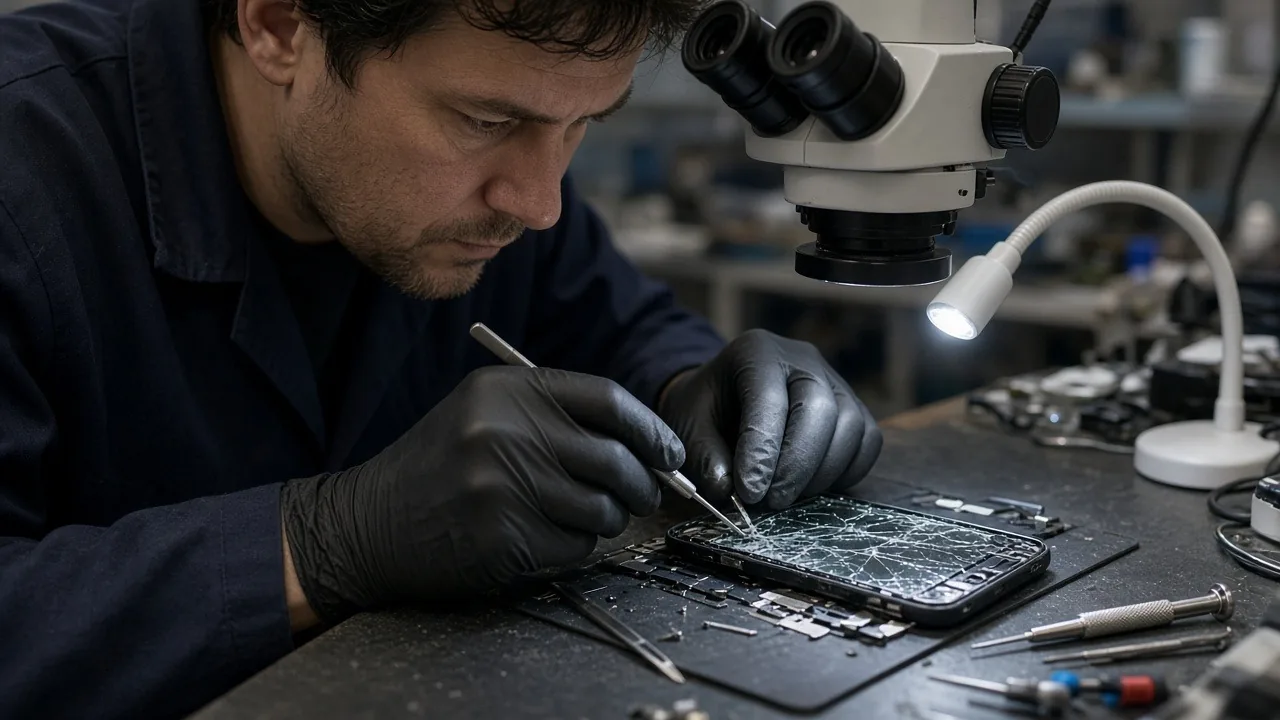
A phone repair shop is funded on fast-moving inventory rather than heavy machinery. Screens, batteries, charging ports and back glass for dozens of models have to be on hand before a customer walks in, because most people want the device back the same day. The bench itself — microscope, soldering and rework station, screen separator, laminating and ultrasonic cleaning equipment — is a modest one-time cost next to the parts that turn over every week.
Revenue arrives as many small tickets, mostly by card, plus accessory sales and trade-in or refurbished device sales at some shops. That daily rhythm is what funders read. A shop that deposits every day on a predictable pattern is easy to underwrite; one whose income swings with a single wholesale device deal is harder. Parts prices and model turnover also move fast, so funders like to see that stock is bought close to demand rather than piled up for phones nobody brings in.
What funding options fit phone repair shops best?
Match the product to the purchase. A microscope that lasts years is a different need from a batch of screens for this month’s most common repair.
- Business line of credit: for parts restocks drawn as needed and repaid as repairs are paid, so you pay only for what you use.
- Equipment financing: for microscopes, rework stations, laser back-glass removers and board-level repair tools, with the equipment as collateral.
- Merchant cash advance: a fast option underwritten on card receipts and repaid as a share of sales; generally costlier, so compare it against a line first.
- Term funding: for a build-out, a mall kiosk that becomes a storefront, or a second location, where a fixed payment over a set term fits a one-time project.
How do you fund parts inventory without overstocking?
Fund the parts that sell, in the quantities that sell, and repay on roughly the same cycle. Start from your repair log: the handful of models and part types that make up most of your tickets deserve deep stock, while rare parts are better ordered per job. A revolving line drawn for each restock and paid down as repairs close follows that cycle better than a lump sum.
Here is a simple worked example. If your top three screen models move about 40 units a month at an average parts cost of $60, that is roughly $2,400 of stock turning monthly. Funding three months of it up front ties up $7,200 in parts that lose value as newer models arrive; drawing $2,400 to $3,000 a month against a line keeps the shelf full without carrying obsolete stock. Our guide to funding inventory purchases covers when a one-time stock-up makes sense instead.
Should you finance repair equipment or a second location?
Finance equipment when it adds repairs you currently turn away or send out. Board-level microsoldering, back-glass lasers and screen refurbishing tools let a shop take jobs that were previously referred elsewhere, and the extra tickets are what pay the financing back. Buy the tool only once you have seen enough demand for that repair to keep it busy.
A second location is a bigger decision. Before funding one, check that the first shop is profitable on its own, that you have a technician you trust to run the bench without you, and that the new site has foot traffic of its own. Rules on repair access matter too: the Federal Trade Commission’s Nixing the Fix report to Congress found that many manufacturer repair restrictions limit consumer choice and raise costs, and state right-to-repair laws are changing which parts and tools independent shops can get. A plan that depends on one parts channel is a risk a funder will ask about.
How does a phone repair shop qualify for funding?
Funders typically want recent business bank statements, card processing statements, a minimum time in business and, for equipment, a quote for the tool you plan to buy. A shop with several months of steady deposits matches with more funders than a brand-new one, and card-heavy shops often have more options because card receipts are easy to verify.
Keep business and personal money in separate accounts, deposit cash takings rather than holding them, and be ready to explain a slow month. Funders read the account the money lands in, so a clean statement helps more than a strong month that never reached the bank. Checking your options won’t affect your credit score, so you can see what is available before committing.
How does matching through a broker work?
The Broker Shop is a funding broker, not a lender. You complete one short application and we send it to the funders in our network whose guidelines fit a phone repair business, so they compete for the deal. That matters because a single application is no guarantee: in the Federal Reserve Banks’ 2025 Small Business Credit Survey, 42% of employer-firm applicants received the full amount they sought. You compare offers side by side before choosing. For the full list of products, see all small-business funding options, and for related businesses see funding for IT services companies.
Keep the parts shelf full
A shop that can’t fix it today loses the customer to the shop that can. One 2-minute application is matched to the funders whose guidelines you meet. It's free, and checking your options won't affect your credit score.
See What I Qualify For →The bottom line: Phone repair shops do best funding fast-turning parts with a flexible line repaid as repairs close, and financing bench equipment only when it brings in repairs they currently turn away — one 2-minute application matches you to the funders whose guidelines you meet.
Frequently asked questions
Sources: Federal Reserve Banks — 2026 Report on Employer Firms, Small Business Credit Survey (42% of applicants received the full amount sought); Federal Trade Commission — Nixing the Fix: An FTC Report to Congress on Repair Restrictions (May 2021)