

Backlinks — links from other websites to yours — are still one of the strongest signals search engines use to decide who to trust. Here is why they matter, what separates a valuable link from a worthless one, and how to earn them without wasting money.
What backlinks are, and why search engines count them
A backlink is simply another site linking to yours. Search engines treat each one as a vote of confidence: if reputable sites point to your page, it is probably worth trusting and ranking. This idea — links as endorsements — has been at the core of Google’s ranking since PageRank, and it still carries real weight today alongside content quality and user signals.
The same logic now feeds AI search: assistants lean on well-linked, authoritative pages when deciding which sources to cite. So links do double duty — they lift traditional rankings and raise your odds of being named in an AI answer.
Not all links are equal
One link from a relevant, respected site is worth more than a hundred from spammy directories — and low-quality links can actively hurt you. What makes a link valuable: relevance (the linking site is in a related space), authority (it is itself trusted), a dofollow attribute (so ranking value passes), and natural, descriptive anchor text rather than repeated exact-match keywords.
Avoid buying links in bulk, link farms, and anything that promises "1,000 backlinks for $10." Google’s spam systems are built to catch exactly that, and the cleanup costs more than the links ever earned.
How a small business earns quality backlinks
The durable way is to be worth linking to: publish genuinely useful guides, original data, or tools that others want to reference. Beyond that, the reliable tactics are guest posts on relevant sites, partnerships and supplier/association pages, local press and directories, and reciprocal exchanges with sites in your space.
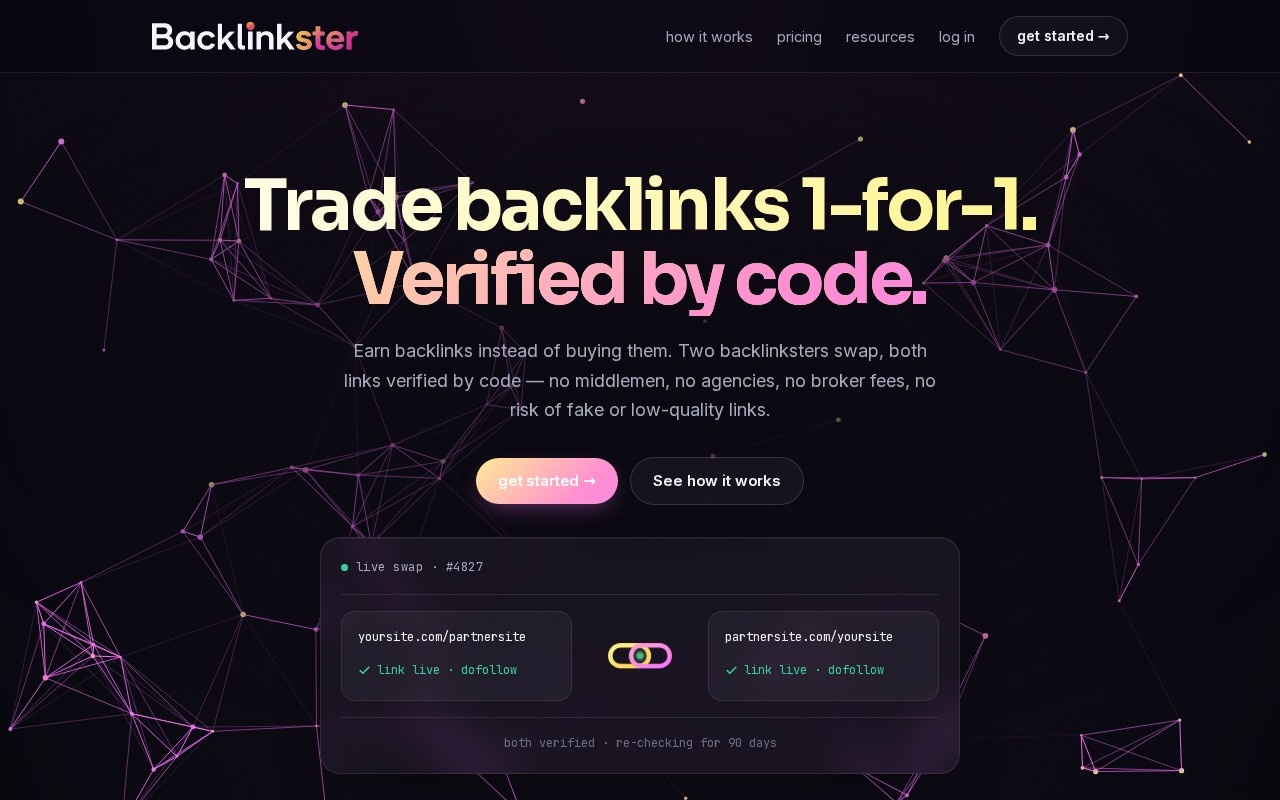
If you want to do exchanges without the usual risk, Backlinkster runs a 1-for-1 backlink exchange that is verified by code — both links must be live and dofollow before a swap completes, with 90-day monitoring so partners can’t quietly remove your link afterward. Their resources cover the details.
Backlinks are one leg of a three-legged stool
Links work best alongside the other two legs: solid on-page SEO (clear titles, structure, and answer-first content — see our guide on building a site for AI search) and a genuinely helpful page that earns its ranking. A great link to a weak page won’t save it; a strong page with no links stays hidden. Build all three.
Frequently Asked Questions
Funding to grow the business behind the website
Once the site is bringing customers in, The Broker Shop matches you with competing lenders for the capital to keep up. It's free, and checking your options won't affect your credit score.
See What I Qualify For →The bottom line: Backlinks are votes of trust that still move rankings and AI citations — earn a modest number of relevant, high-quality links (great content, partnerships, or a verified exchange like Backlinkster) rather than chasing volume.