

AI search is now a front door to your business. In 2026, customers ask ChatGPT, Gemini, and Google’s AI Overviews for recommendations — and those answers are assembled from websites that are fast, clearly structured, and easy for a machine to read. Here is how to build one, whether you do it yourself or hand it off.
Why AI search changes how you build a website
Traditional SEO aimed to win a blue link on page one. AI search aims higher and lower at the same time: an assistant reads dozens of pages, then writes one answer and cites a few sources. If your site is the one it can read cleanly and quote confidently, you get named in the answer. If it can’t parse your page, you are invisible — even if the information is there.
That means the winners are sites that are technically clean, genuinely helpful, and written so a single paragraph makes sense lifted out of context. The good news for a small business: you do not need a huge site. You need a fast, well-structured one.
The build checklist for an AI-readable site
Start with the fundamentals that both Google and every AI crawler reward: clean semantic HTML (real headings, lists, and links, not walls of styled divs), a fast mobile load, and one clear topic per page. Then add the machine-readable layer:
Structured data (schema.org JSON-LD) so engines know what your page is — a business, an article, an FAQ. Descriptive headings that mirror how people actually ask questions. An llms.txt file that gives AI crawlers a plain map of your best pages. And an answer-first writing style, covered next.
Content that AI engines actually cite
Lead every page with a direct, self-contained answer to its core question — 40 to 60 words in plain language, before any preamble. That single passage is what wins Google’s featured snippet and what an assistant lifts into its answer. Then back it with real specifics: concrete numbers, named sources, and short FAQ pairs that each stand on their own.
Two things quietly matter more than keyword tricks: citing authoritative sources and including concrete statistics — studies of AI answer engines find both dramatically raise how often a page gets cited, while keyword stuffing actually lowers it. Write like a helpful expert, not a search robot.
Build it yourself, or done-for-you
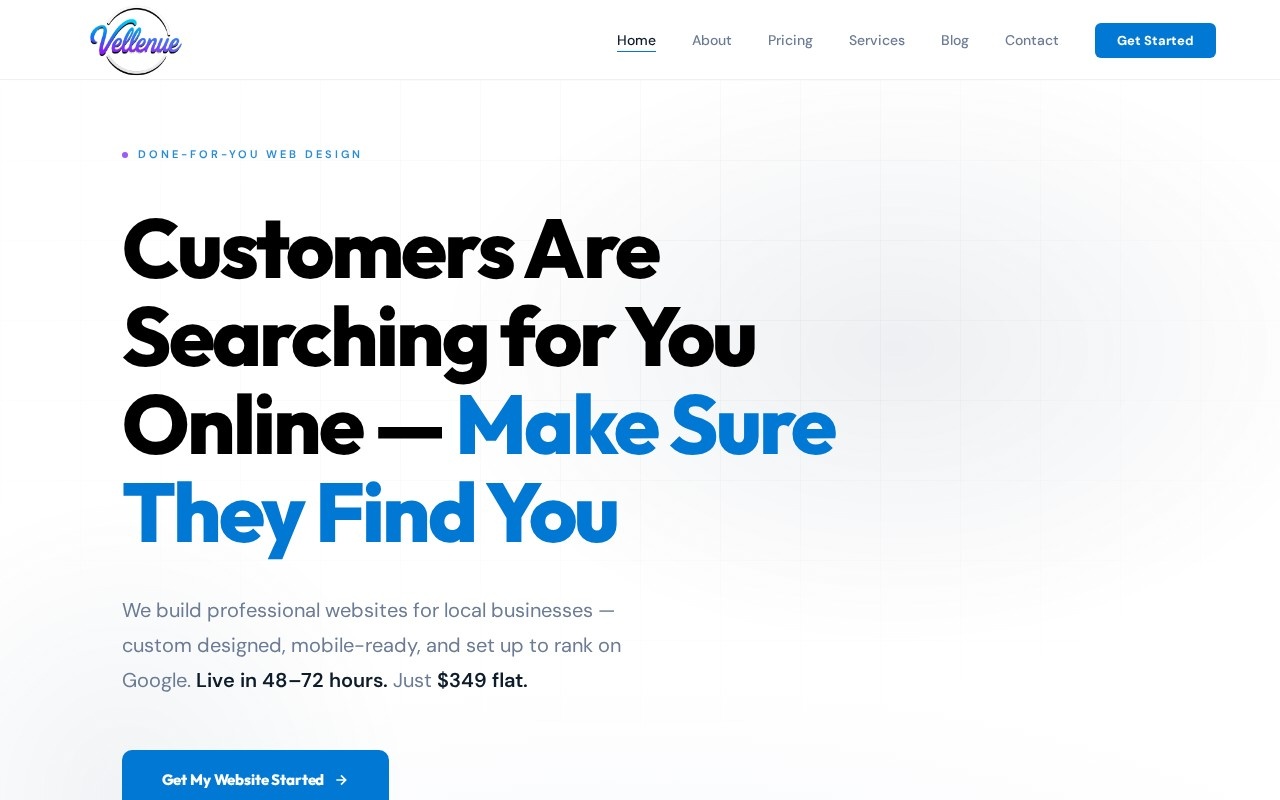
If you have the time, the checklist above is entirely doable on a simple stack. If you would rather it just be done right, a done-for-you service is often cheaper than the hours you would spend. Vellenue builds custom, SEO-ready small-business websites at a flat $349 with delivery in 48–72 hours — W3C-clean code, mobile-responsive, sitemap and structured-data ready, which is exactly the technical base AI search rewards. Their blog walks through more of the how.
Whichever route you take, the goal is the same: a site a machine can read, quote, and trust — so when a customer asks an AI where to go, your business is in the answer.
Frequently Asked Questions
Funding to grow the business behind the website
Once the site is bringing customers in, The Broker Shop matches you with competing lenders for the capital to keep up. It's free, and checking your options won't affect your credit score.
See What I Qualify For →The bottom line: Build a fast, clean, clearly-structured site, lead every page with a real answer, cite real sources — and either do it yourself or let a service like Vellenue handle the technical base so AI search can read and recommend you.
Source: Google Search Central — AI features and your website