
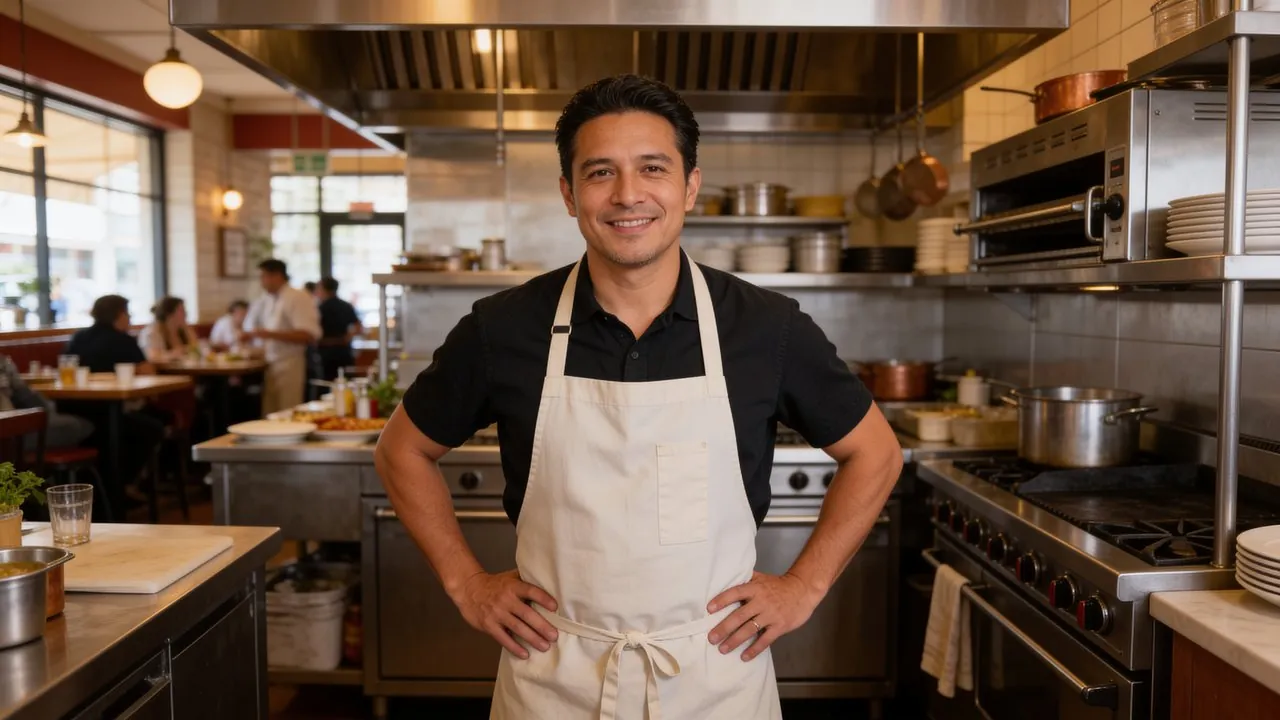
Finance restaurant equipment from any vendor (new or used) without being locked to a single supplier's catalog. Specialty funders, real rates, real terms. Most files fund in 3 to 7 days with 580+ FICO and 12+ months of operation.
Why restaurant equipment is its own financing niche
Generic business funders sometimes underwrite restaurant equipment files poorly because they do not understand the equipment market, the resale values, or the cash flow patterns of restaurant operations. Specialty restaurant equipment funders know exactly what a Hobart mixer is worth used, how long a True walk-in lasts, and that a Bunn coffee brewer financed at month 3 of a new restaurant is a much different risk than the same brewer at month 36. The broker model wins for restaurant operators because we route files to the specialty funders most likely to fund the specific equipment + business profile.
What you can finance
Cooking Equipment
Commercial ranges, ovens, fryers, grills, broilers, salamanders, charbroilers, woks, pizza ovens. New or used. 60-84 month terms typical.
Refrigeration
Walk-in coolers and freezers, reach-in refrigerators, prep tables, undercounter units, beverage refrigerators, ice machines. Long useful life, easy to finance.
Dishwashing
Commercial dishwashers, glass washers, three-compartment sinks, drying racks. Sometimes bundled with detergent/leasing service plans.
POS & Tech
Point-of-sale systems (Toast, Square, Clover hardware), kitchen display systems, online ordering tablets, printers, payment terminals.
Hood & Ventilation
Type I commercial hoods, makeup air units, ansul fire suppression, exhaust fans. Code-required for most commercial cooking; high install cost.
Food Trucks & Trailers
Built-out food trucks, concession trailers, mobile kitchens. Often bundled equipment financing + working capital for first 3 months operation.
Espresso & Bar
Espresso machines, grinders, beer towers and kegerators, ice machines, blenders, bar refrigeration. Coffee shops, bars, hybrid concepts.
Smallwares & Prep
Mixers, slicers, food processors, prep tables, sinks, shelving, smallwares (in package deals). Usually bundled with a larger purchase.
Build-Out Bundles
Some funders bundle equipment + tenant improvement build-out into one financing package. Useful for new locations and major renovations.
Vendor financing vs broker-network financing
Two paths to financing restaurant equipment, with different best-fits:
Vendor financing (Restaurant Warehouse, KaTom, WebstaurantStore, equipment dealer programs)
The supplier finances the purchase directly. Application is one click, approval is fast, and rates are sometimes promotional (0% APR for 6-12 months is common). The trade-off: you're locked into that supplier's catalog. If they don't carry the exact ice machine or hood configuration you want, you cannot use their financing. Best for: single-vendor purchases of new equipment with a strong promo rate.
Broker-network financing (us)
The financing is independent of the vendor. You pick whatever equipment from any source (new equipment dealer, used equipment auction, used from another restaurant, multiple vendors bundled). The broker arranges financing with a specialty funder who funds the entire purchase. Best for: multi-vendor purchases, used equipment, bundles that include build-out costs, or financing that needs to match a specific operating cash flow pattern.
Qualification thresholds
- Time in business: 12+ months preferred. New restaurants in months 6-12 are workable with stronger personal credit + larger down payment.
- Personal FICO: 580+ standard. 540+ with 20-30% down at specialty funders. 650+ opens the best rates.
- Monthly revenue: $15,000+ minimum. $30,000+ opens better rates. Pre-opening restaurants finance equipment based on personal credit and pro-forma projections rather than revenue history.
- Down payment: 10-20% standard. 0% down available for established files (24+ months, 680+ FICO). Up to 30% required for weaker credit.
- Equipment age (if used): Under 8-10 years old preferred. Older used equipment usually requires a larger down payment.
- Business documentation: Last 3-6 months bank statements, last 1-2 years tax returns, vendor invoice or quote for the equipment.
The Section 179 angle for restaurant operators
The 2025 Section 179 deduction limit is approximately $1.16 million in qualifying equipment purchases. For a restaurant operator buying $80,000 of equipment, that's $80,000 of taxable income removed at your business's marginal rate. At a 25% effective rate, that's $20,000 in tax savings, often more than the financing's first-year interest cost. For a full kitchen build-out at $150,000, the Section 179 savings can be $37,500 plus.
This is a major reason established restaurant operators finance equipment (purchase, then own) instead of leasing. Operating leases do not qualify for Section 179; you can deduct the lease payments as expenses but not the full equipment value upfront. See our equipment financing vs leasing comparison for the full math. Consult a CPA for your specific tax situation.
How the process works
- Quote in hand. Get a vendor quote or invoice for the equipment you want to buy.
- 2-minute application. Submit a one-page broker app with the quote, last 3-6 months bank statements, ID, and voided check.
- Quick application + offers. Pre-qualification within 4 hours. Offers from 2-3 specialty restaurant equipment funders within 24-48 hours.
- Pick and sign. Pick the strongest offer. Formal approval happens with chosen funder (5-10 pt temp impact).
- Funder pays the vendor. Funder funds the vendor directly. You receive the equipment, monthly payments start the following month.
Common scenarios we fund
- New location opening. $75K-$200K bundled equipment package for a full kitchen build-out. 60-84 month terms, often 10-15% down.
- Equipment failure replacement. $15K-$40K for emergency walk-in cooler, oven, or hood replacement. 36-60 month terms. Funded in 3-5 days.
- Concept upgrade. $30K-$100K for new pizza oven, charbroiler, espresso machine to expand menu or speed service. 48-60 month terms.
- Food truck purchase. $50K-$180K for built-out truck or trailer with equipment package included. 60-84 month terms, sometimes bundled with first 90 days working capital.
- POS system replacement. $8K-$25K for full POS rollout (terminals, KDS, online ordering). 36-48 month terms. Often vendor financing wins here due to bundled training/install.
Frequently asked questions
See what you qualify for
One 2-minute application is matched to the funders whose guidelines you meet. It's free, and checking your options won't affect your credit score.
See What I Qualify For →