
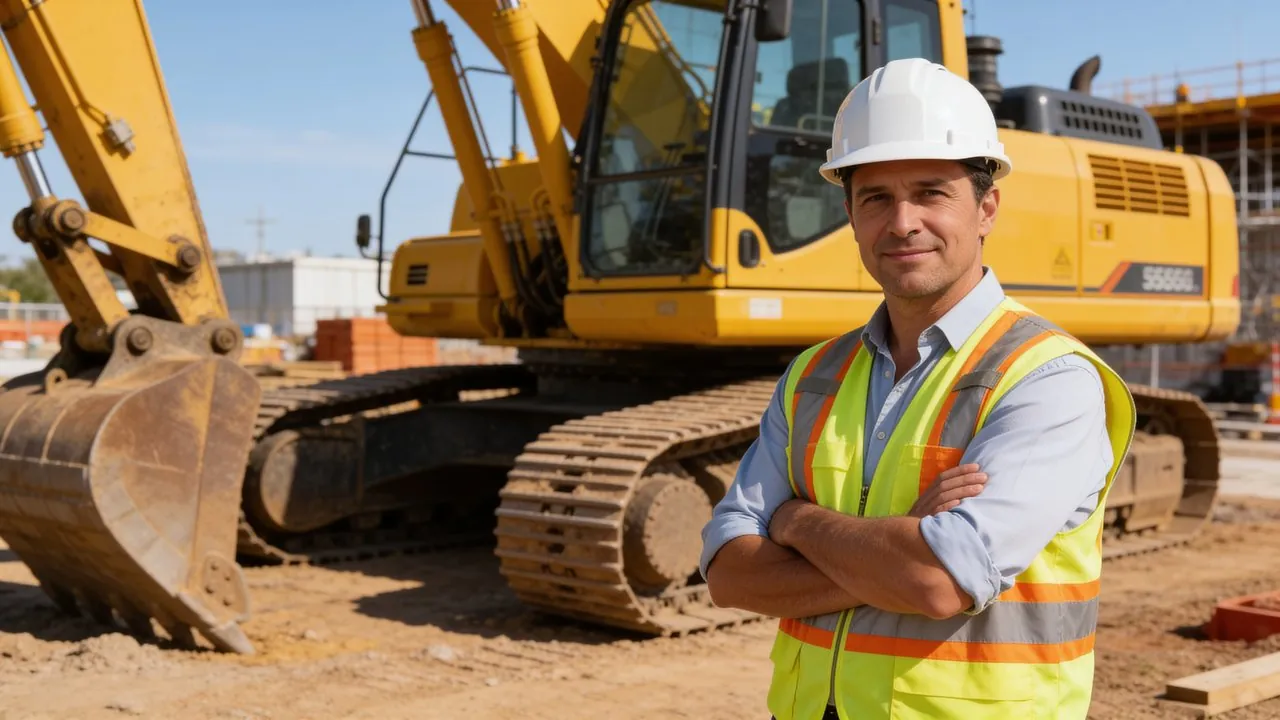
Specialty heavy-equipment funders fund construction equipment differently from generic business loans. New or used, single piece or fleet build-out. 7-15% APR typical, 580+ FICO workable, equipment as collateral keeps rates low even on weaker credit files.
Why construction equipment is its own niche
Heavy equipment retains value better than almost any other business asset. A well-maintained excavator that cost $120K new still sells for $50-70K at 10 years old. A skid steer can run profitably for 12-15 years. Specialty heavy-equipment funders know these residual value curves and price financing accordingly, which is why their rates beat generic business funders. The trade is approval routing: not every funder funds construction equipment, and the ones that do prefer specific equipment types, ages, and contractor profiles.
The broker model wins here because we route files to the funder most likely to fund the specific equipment + business profile. An excavator file goes to a different funder than a concrete pump file, which goes to a different funder than a fleet of dump trucks. One application to us, the right funder for each piece.
What you can finance
Excavators
Mini, midi, and standard excavators. Cat, Komatsu, John Deere, Volvo, Bobcat. New or used up to 15 years. 60-84 month terms typical for new, 36-60 for used.
Skid Steers & Loaders
Compact track loaders, wheel loaders, skid steers with attachments. High versatility, strong resale. Most contractors finance these as fleet build-out.
Dump Trucks & Haulers
Dump trucks, articulated haulers, water trucks, vacuum trucks. Long financing terms (60-84 mo). Often financed alongside equipment build-out.
Lifts & Aerial Work
Scissor lifts, boom lifts, telehandlers, articulating booms. JLG, Genie, Skyjack. Often rental-fleet companies finance these in volume.
Concrete & Paving
Concrete pumps, mixers, pavers, rollers, vibratory plates. Specialty financing because the equipment is project-specific.
Cranes
Mobile cranes, crawler cranes, tower cranes (rental). Higher rates and shorter terms due to lower funder volume. Often specialty crane funders only.
Attachments
Buckets, hammers, augers, grapples, plate compactors. Bundled with the host machine or financed separately as add-ons.
Trailers
Equipment trailers, dump trailers, lowboys, gooseneck trailers. Lower rates than equipment because resale is very stable.
Compactors & Smaller
Plate compactors, rammers, generators, welders, smaller power equipment. Often financed in equipment package bundles.
New vs used construction equipment financing
Both work. The terms differ:
New equipment financing
- 60-84 month terms typical
- 10-15% down payment (sometimes 0% for established contractors)
- 7-12% APR for well-qualified files
- Manufacturer financing sometimes available (similar to vehicle dealer financing) with promotional rates
- Easier to qualify because resale value is highest
Used equipment financing
- 24-60 month terms typical (shorter than new)
- 15-25% down payment standard
- 9-15% APR typical
- Equipment under 10-15 years preferred; older units require larger down + shorter term
- Auction purchases (Ritchie Bros, IronPlanet) routinely financed; inspection report often required
- Specialty used-equipment funders typically beat generic business funders on price
Qualification thresholds
- Time in business: 12+ months preferred. New contractors in months 6-12 with strong personal credit + larger down workable.
- Personal FICO: 580+ standard. 550+ with 25-30% down at specialty funders. 650+ opens best rates.
- Monthly revenue: $15,000+ minimum. $50,000+ opens better rates and larger limits. Contractors with seasonal revenue should expect to demonstrate annual revenue history.
- Down payment: 10-30% based on FICO, equipment age, and time in business.
- Equipment age (used): Most funders fund equipment up to 15-20 years old, depending on make and type.
- Documentation: 3-6 months business bank statements, 1-2 years tax returns, vendor invoice or auction confirmation, ID, voided check.
Common scenarios we fund
- Owner-operator first equipment purchase. $40-80K for a used skid steer or mini excavator. 48-60 month term. 15-20% down. Most common contractor financing scenario.
- Fleet expansion. Adding a second or third major machine. $80-300K. Financing often bundled with equipment for a single closing.
- Equipment replacement at end of useful life. $50-200K to replace an old unit. Trade-in value sometimes counts as down payment.
- Auction purchase. $30-150K bought at Ritchie Bros or IronPlanet. Specialty funder funds against inspection report.
- Specialty machinery for a specific contract. Concrete pump for a job, crane for a project, specialized attachment. Financing matches contract revenue when possible.
Construction equipment financing vs construction loan (clearing up confusion)
Different products entirely, despite the shared word. Construction equipment financing funds the purchase of physical equipment (an excavator, a dump truck) you'll use across multiple jobs. Construction loans fund the building of a structure (commercial building, multi-family residential), are drawn in stages as the project progresses, and convert to a permanent mortgage at completion. We broker the equipment side. The structure-building side is bank or specialty real estate funder territory.
The Section 179 angle
Section 179 lets a business expense the full cost of qualifying equipment in year 1 rather than depreciating over 5-7 years. For 2025, the limit is approximately $1.16M with a $2.9M phase-out. On a $150,000 excavator, that's $150K of taxable income removed at the business's marginal rate. At 25% effective, that's $37,500 in tax savings, often more than the financing's first-year interest. See equipment financing vs leasing for the full Section 179 vs operating lease comparison. Consult a CPA for your specific situation.
Frequently asked questions
See what you qualify for
One 2-minute application is matched to the funders whose guidelines you meet. It's free, and checking your options won't affect your credit score.
See What I Qualify For →