
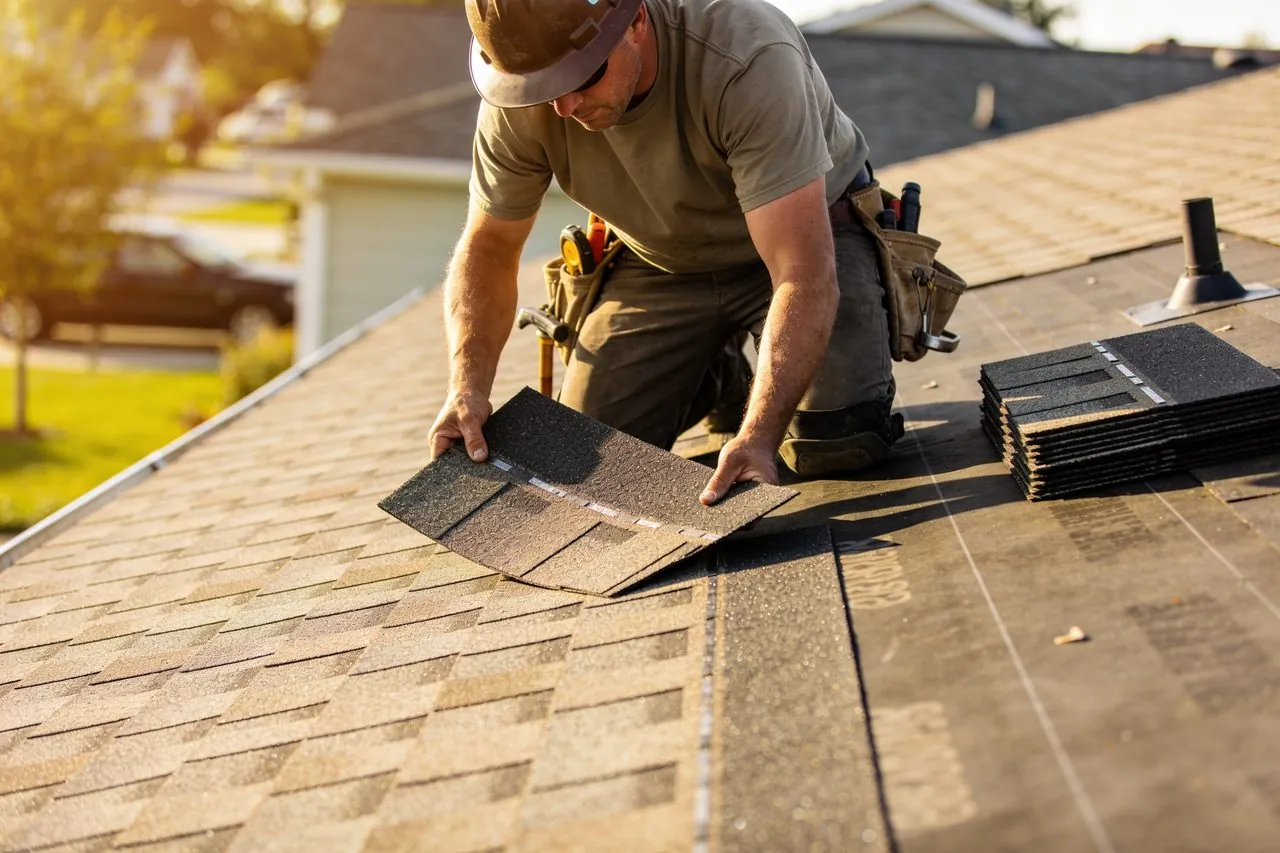
Running a roofing company means laying out serious money before you ever get paid. You buy shingles, underlayment, and metal by the pallet for a big job, put a full crew on the roof, and then wait, sometimes on an insurance adjuster or a storm claim that takes weeks to settle. When a hailstorm rolls through, the work floods in all at once and you need materials and crews before a single check clears. The good news: there are funding products built for exactly this, and The Broker Shop matches you to the funders whose guidelines you meet so you are not fronting every job out of your own pocket.
Material funding for big jobs and storm surges
The math on a large roof can put you underwater before you start. You have to buy the shingles, underlayment, flashing, and disposal up front, often for several roofs at once after a storm, and then invoice and wait while all that material cost sits on your books. That gap between spending and collecting is where a lot of roofing businesses get stuck.
A short-term working-capital option or a business line of credit lets you buy materials for the next job while you are still waiting to get paid on the last one. When a hail or wind event fills your board with work, that liquidity is the difference between scaling up to meet the demand and watching those jobs go to a competitor who could front the materials. Not sure which product fits? Start with our overview of small business funding options.
Bridging the insurance and storm-claim wait
Insurance and storm work is its own kind of cash-flow pain. You complete the tear-off and re-roof, the homeowner is covered, and the money is still tied up while the adjuster processes the claim, the mortgage company releases funds, or the deductible gets sorted out. Meanwhile you already paid for the labor and the materials.
A line of credit is the common tool for bridging that wait. You draw what you need to keep crews working and suppliers paid, then pay it back down once the claim funds land, only carrying a balance on what you actually use. It keeps your operation moving at the pace of the work instead of the pace of an insurance company's paperwork.
Equipment financing for trucks, trailers, and gear
Roofing runs on hardware, and that helps when it comes to funding. With equipment financing, the asset you are buying serves as the collateral, so the funder secures the loan against the dump trailer, the material conveyor, the crane truck, or the work truck itself. That structure tends to make approval more accessible than an unsecured loan, because the equipment backs the deal.
It also lets you preserve cash. Instead of dropping a large sum on a new dump trailer or replacing a truck that keeps breaking down mid-season, you spread the cost over the working life of the equipment while it earns revenue on every job. For a crew taking on bigger contracts, that is usually the smartest way to add capacity without draining your account.
How the broker match works
Here is the part that saves you the headache. Instead of applying to funder after funder and racking up rejections, you fill out one 2-minute application and The Broker Shop matches you to the funders whose guidelines you meet. You compare the strongest offers side by side and pick what fits, whether that is material funding, a line of credit, equipment financing, or a combination. Advertised funding runs from $5,000 to $2 million depending on your business.
It is free to you as the applicant, and checking your options will not affect your credit score. As a broker, The Broker Shop does not lend the money itself; it does the legwork of finding the right funders so you can get back to running crews instead of chasing paperwork. Even if your credit has some dings, there are still options worth exploring.
See what you qualify for
One 2-minute application is matched to the funders whose guidelines you meet. It's free, and checking your options won't affect your credit score.
See What I Qualify For →The bottom line: Roofing runs on materials bought up front and long waits on insurance and storm-claim payouts, so match material funding, a line of credit, and equipment financing to the funders whose guidelines you meet, all from one 2-minute application.